
What New Zealand B2B Businesses Need to Know About the Most Effective Thought Leadership Strategies for 2026
Executive summary
If your New Zealand B2B brand wants to win in 2026, treat thought leadership like a top-tier growth and defence engine—not a side project. Decision-makers and C-suite leaders give real time to high-quality insights; strong programmes earn trust, open doors to RFPs, justify premium pricing and help you retain key accounts. At the same time, content marketing teams report ongoing gaps: too few resources, uneven measurement and weak links to sales outcomes.
The opportunity for NZ firms is to combine the persuasive power of thought leadership with the operational discipline of modern content marketing—tight governance, measurable outcomes, and formats buyers actually use.
We’ve pulled data from two reports (Edelman–LinkedIn B2B Thought Leadership Impact Report and Content Marketing Institute & MarketingProfs: B2B Content Marketing Benchmarks, Budgets, and Trends) and then carried out our own analyses and interpretations, to give you actionable advice.
Part 1: The 2026 buyer reality you must design for
1) Most buyers are out of market until they’re not
Only a fraction of your addressable market is “in market” at any moment, but senior people still spend meaningful time with strong thinking every week. Your future champions will give attention to content that helps them see a problem in a new way and take the next step.
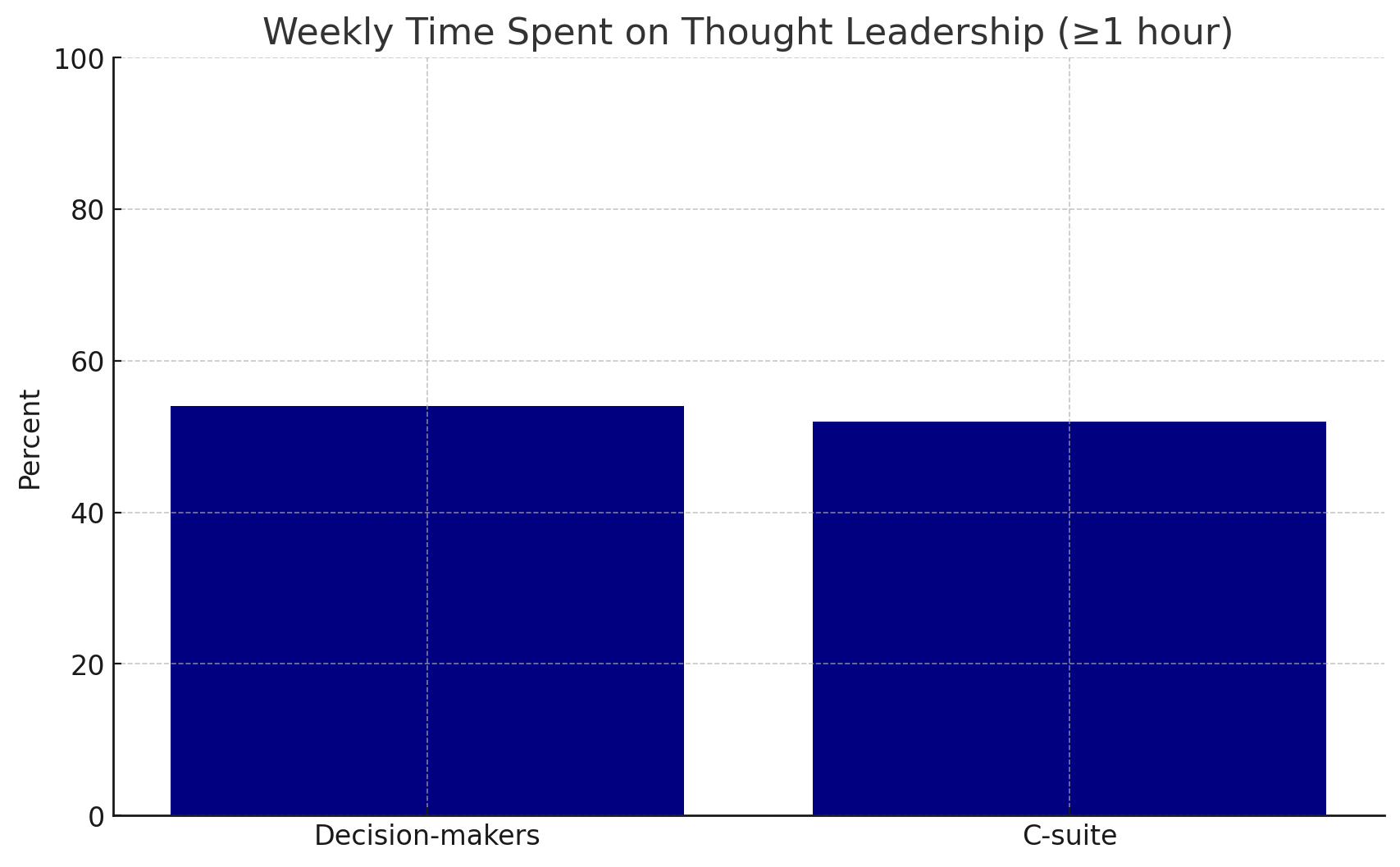 Source: Edelman Weekly Time Spent on Thought Leadership (≥1 hour)
Your takeaway: Stop treating thought leadership as end-of-funnel. Its primary job is to build future demand—by reframing problems, quantifying the cost of inaction and showing a credible path to value. In a small, relationship-driven market like ours, the same flagship insight can drive awareness, shape RFP criteria, and support board-level conversations on both sides of the Tasman.
2) Trust is the core currency
Executives regard clear, evidence-based thought leadership as a more trustworthy signal of a supplier’s capability than product-first materials. Trust compounds: consistent quality builds positive feeling about your company and increases willingness to engage with your sales team.
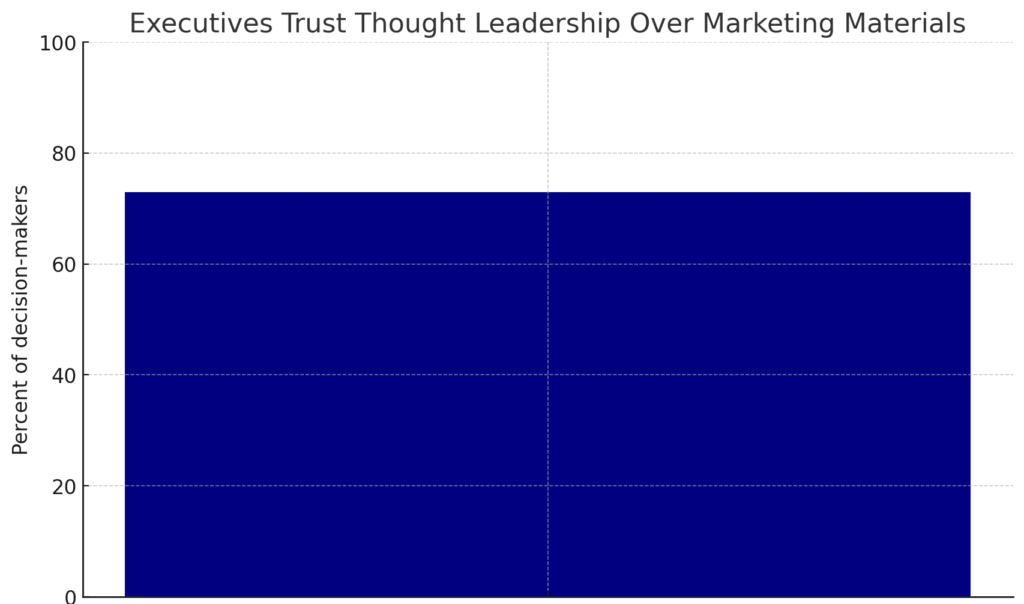
Source: Edelman Executives Trust Thought Leadership Over Marketing Materials
Your takeaway: The buyers you care about talk to each other—industry leaders, directors, public-sector CFOs, and trans-Tasman procurement specialists. A strong point of view, backed by data and caseproof, earns peer-to-peer referrals and makes it easier for a board member in Auckland or Sydney to say, “We should invite them in.”
3) Thought leadership moves revenue—and defends revenue
High-quality programmes make buyers more open to outreach, more likely to invite you into formal buying processes, and more comfortable with premium pricing. On the flip side, weak or absent thought leadership can make your customers vulnerable to competitors’ narratives, especially during renewals.
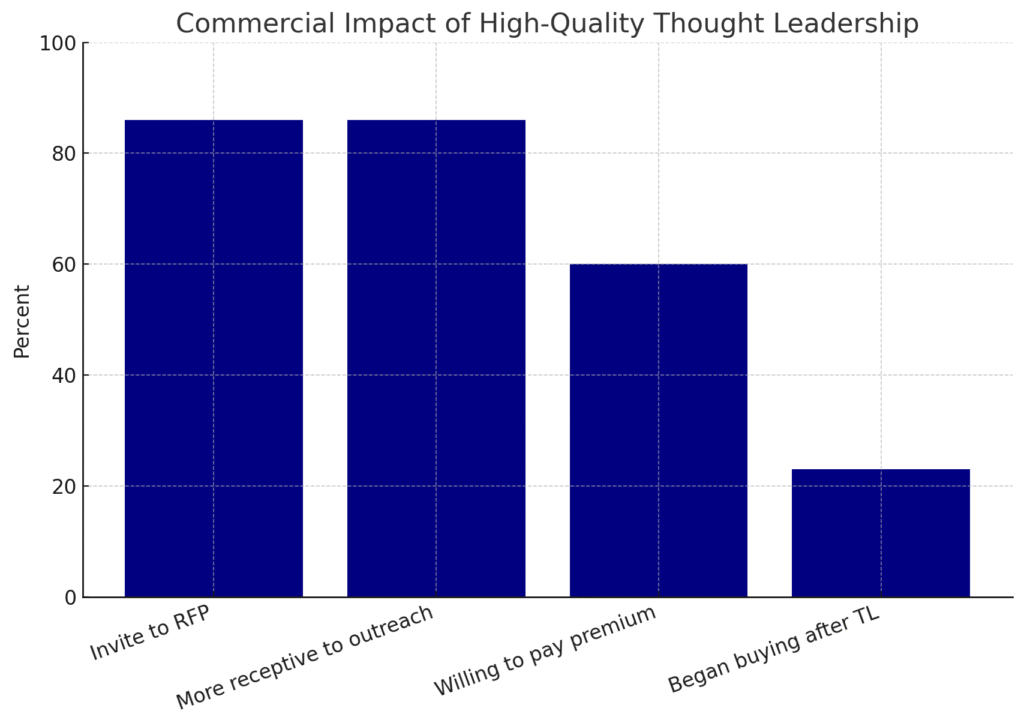
Source: Edelman Commercial Impact (RFPs, receptivity, premium, purchase)
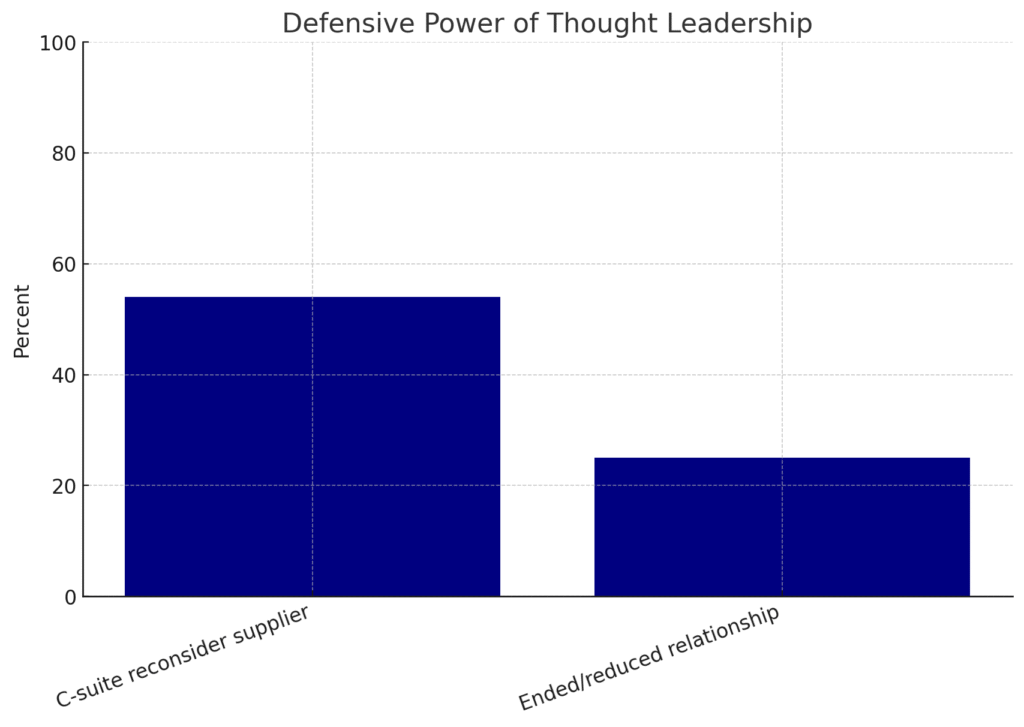
Source: Edelman Defensive Power (reconsidering or reducing supplier relationships)
Your takeaway: The “defence” side matters: a single churn event can materially hit your revenue plan. Treat recurring executive briefings and sector-specific memos as retention assets, not just marketing content.
Part 2: What “great” looks like in 2026
Across studies, leaders describe great thought leadership as:
-
Evidence-first: grounded in solid data and referenced research.
-
Clarifying: helps executives understand the next big challenge or opportunity.
-
Doable: translates insight into practical steps, models, and case examples.
Good-looking content is table stakes. “Great” content has a defensible point of view, clear methods, and simple tools that let a CFO, COO, or CTO act on Monday morning.
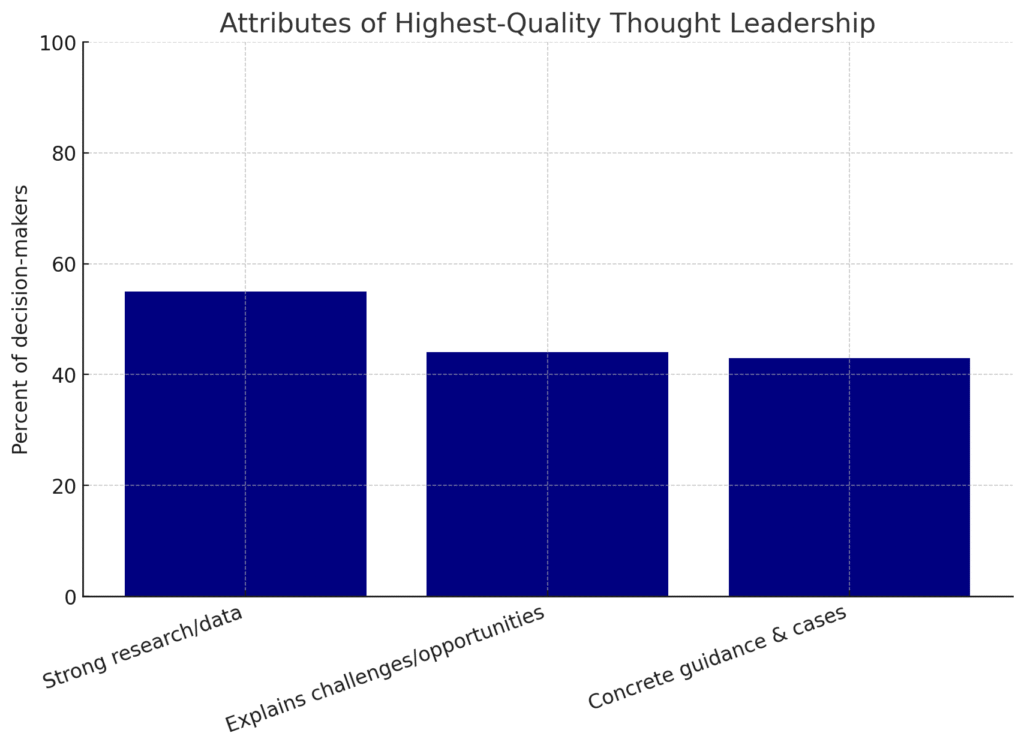
Source: Edelman Attributes of Highest-Quality Thought Leadership
Part 3: Where content marketing is actually working (and how to borrow it)
The latest B2B content marketing benchmarks reveal how teams are executing day-to-day. Use these signals to shape your 2026 thought leadership system.
A. Formats and channels that punch above their weight
-
Videos and case studies are the most convincing content formats for complex decisions, with e-books/white papers and research reports not far behind.
-
Short articles remain the most widely used format for cadence and reach.
-
In-person events and webinars are rated the most effective distribution channels, followed by email, organic social platforms (especially LinkedIn for B2B), and blogs on the corporate site.
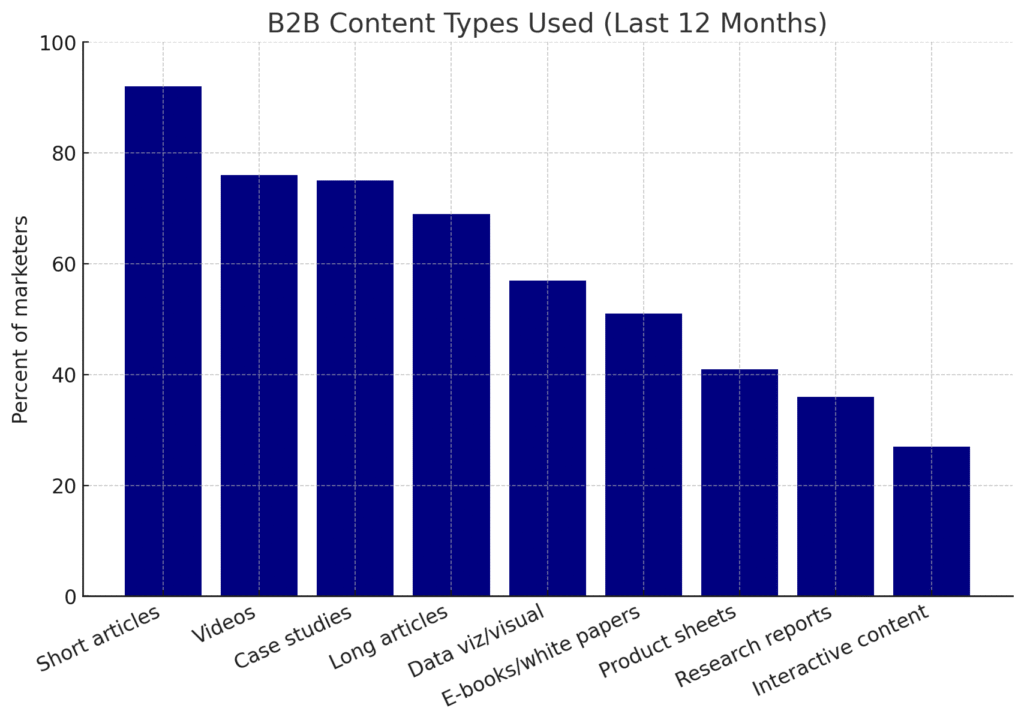
Source: CMI B2B Content Types Used (last 12 months)
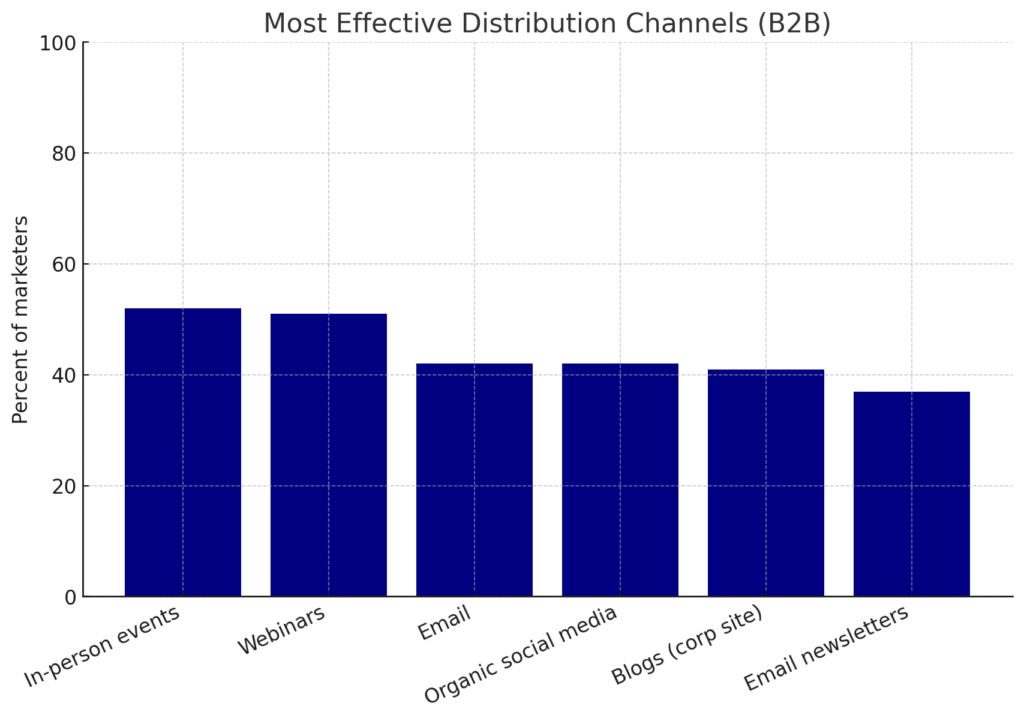
Source: CMI Most Effective Distribution Channels (B2B)
How to apply this in NZ:
-
Pair an annual flagship with video and cases. Turn your big study into a 6–8 minute executive video and 2–3 board-ready case stories.
-
Run a quarterly executive forum. In-person in Auckland or Wellington (plus virtual to reach Australia), with buyer-specific breakouts.
-
Operationalise a “Shorts” stream. Publish weekly 500–800-word explainers that interpret market signals and link back to flagship themes.
B. Goals and measurement that connect to revenue
B2B marketers report that content marketing is excellent at brand awareness and demand generation, with meaningful effects on lead nurturing, customer loyalty, and revenue.
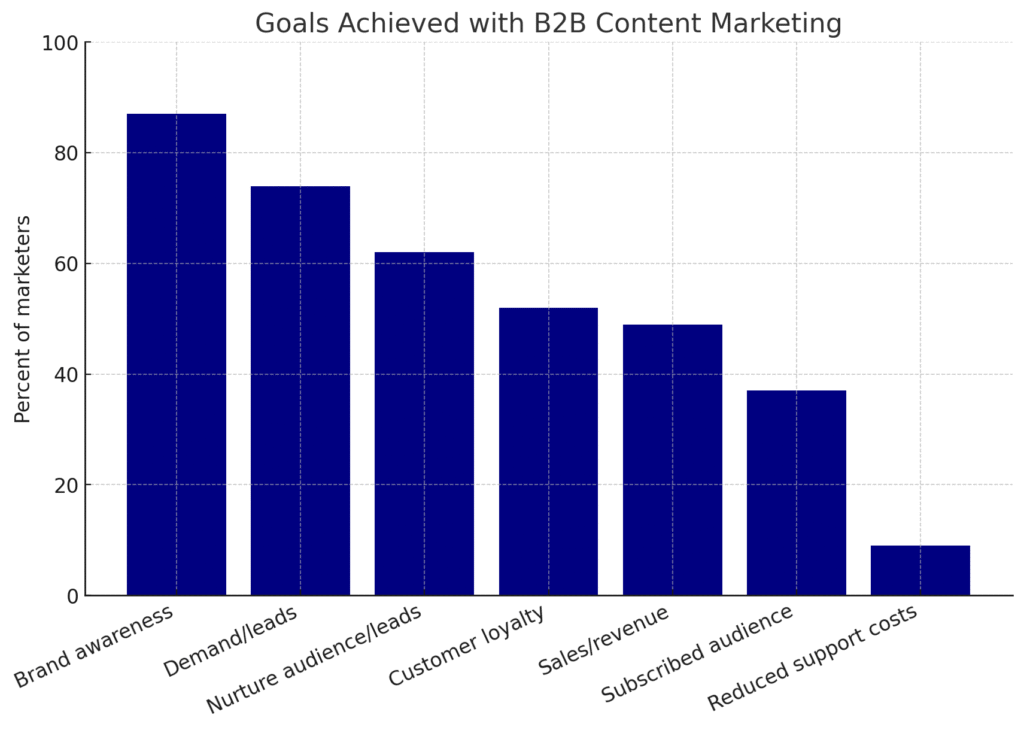
Source: CMI Goals Achieved with B2B Content Marketing
Upgrade your scorecard:
-
Leading indicators: senior meetings created, executive forum attendance, and RFP invitations.
-
Lagging indicators: opportunity velocity, win rate versus named competitors, price realisation (premium), and renewal rate.
-
Defence indicators: engagement with at-risk accounts; shift in executive sentiment before/after your briefings.
C. Paid distribution: be selective, not spray-and-pray
Most B2B teams use paid channels. Social ads are common, but search engine marketing (SEM/PPC) is often rated the best performer for content-driven outcomes. Sponsorships rank well for authority and access to niche audiences.
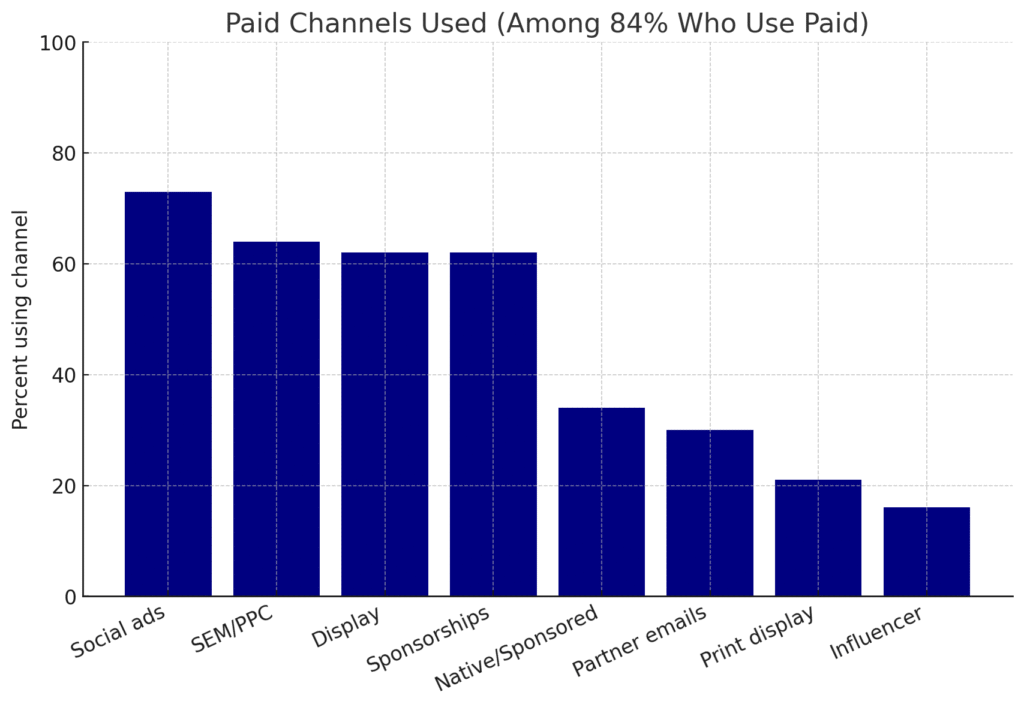
Source: CMI Paid Channels Used (among users of paid)
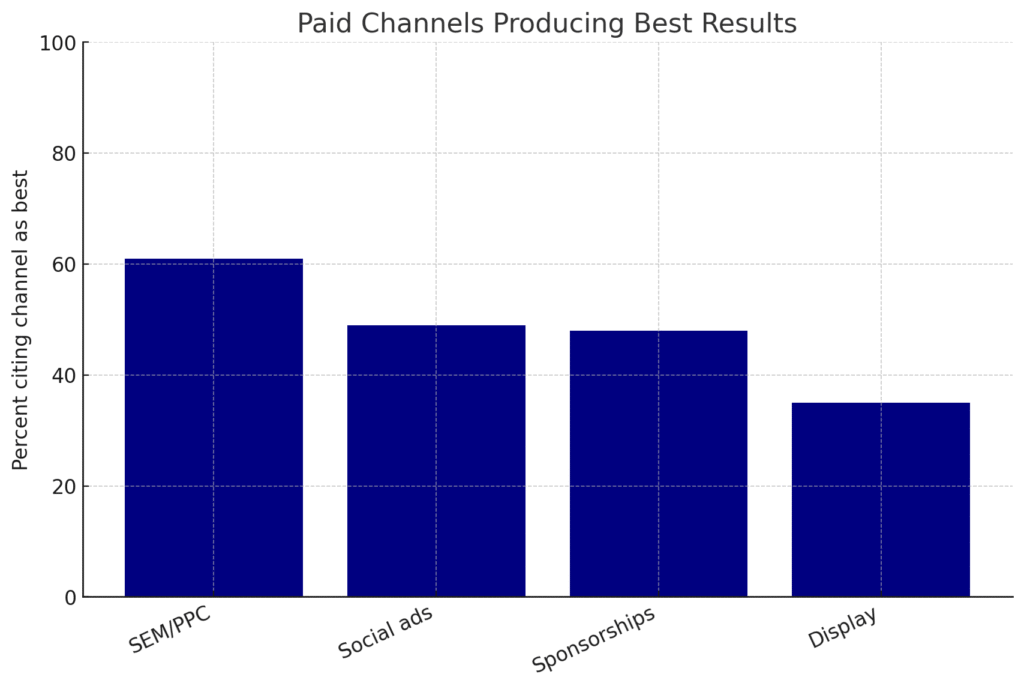
Source: CMI Paid Channels Producing Best Results
Your moves:
Use paid to amplify flagship and event spikes, not to mask weak messaging. Prioritise search for intent capture and targeted sponsorships for authority with boards, industry bodies, and technical communities.
D. AI is reducing grunt work; governance drives the gains
A clear majority of B2B marketers report using generative AI; many see fewer tedious tasks, faster workflows, and improved optimisation. The big difference between top performers and everyone else is governance—written guidelines, integration into daily processes, and human review.
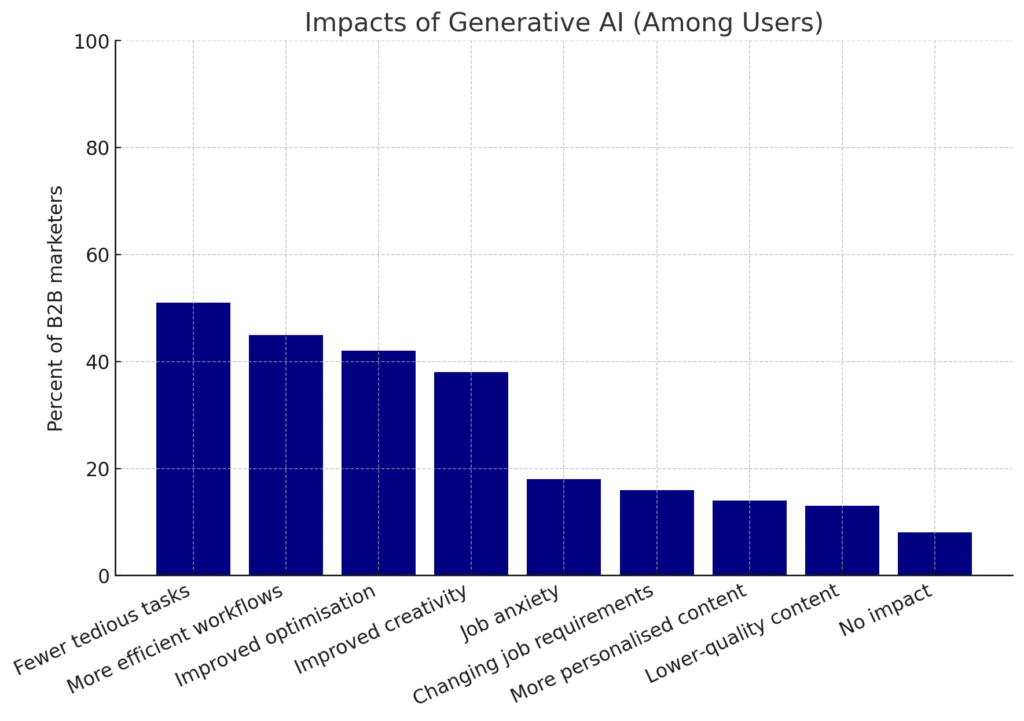
Source: CMI Impacts of Generative AI (among users)
Practical approach for 2026:
-
Document AI guardrails (tone, originality, disclosure, approval steps).
-
Automate the boring bits (transcripts, first-draft outlines, repurposing, SEO checks), and reserve human time for the POV, interviews, and cases.
-
Watermark and log AI-assisted assets to ensure auditability and quality control.
E. Budgets and investment focus
Budgets for content are expected to hold or increase. Investment continues to shift to video and thought leadership content, alongside rising spend on AI for optimisation and creation.
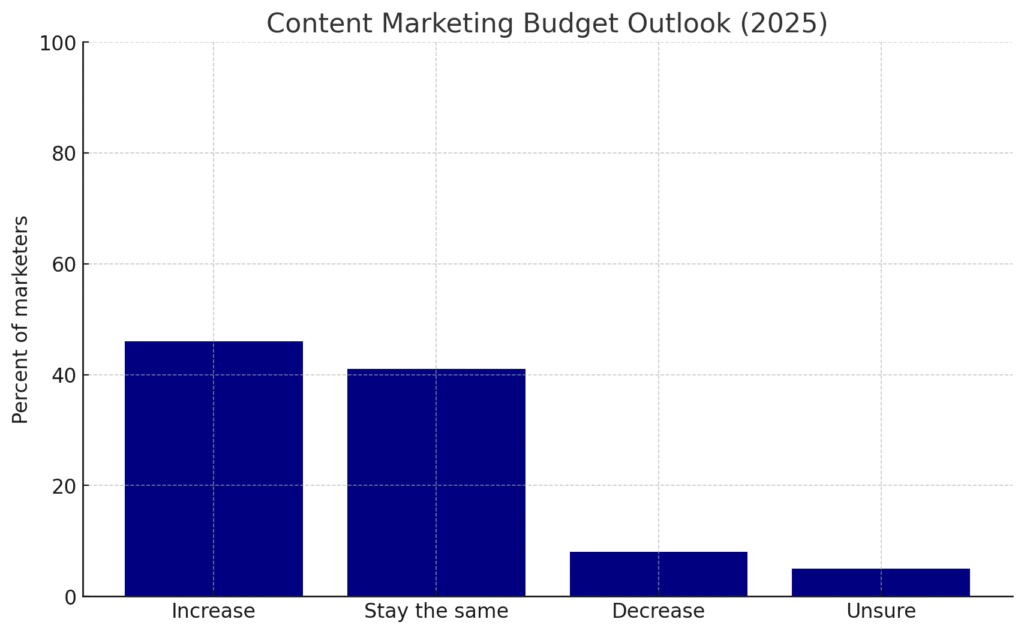
Source: CMI Content Marketing Budget Outlook
NZ translation:
Fund research and formats that senior people actually use: flagship studies, videos, cases, and executive events—plus the measurement plumbing that links content to meetings, RFPs, and renewals.
F. The stubborn gaps to fix
-
Resourcing: lack of people and time remains the #1 blocker.
-
Measurement: teams still over-index on web/social traffic and find it hard to attribute ROI.
-
Alignment: content often floats away from the buyer journey and from sales motions.
-
Silos: handoffs between brand, product, sales, and customer success are messy.
-
Scalable model: too few teams have a repeatable creation and distribution framework.
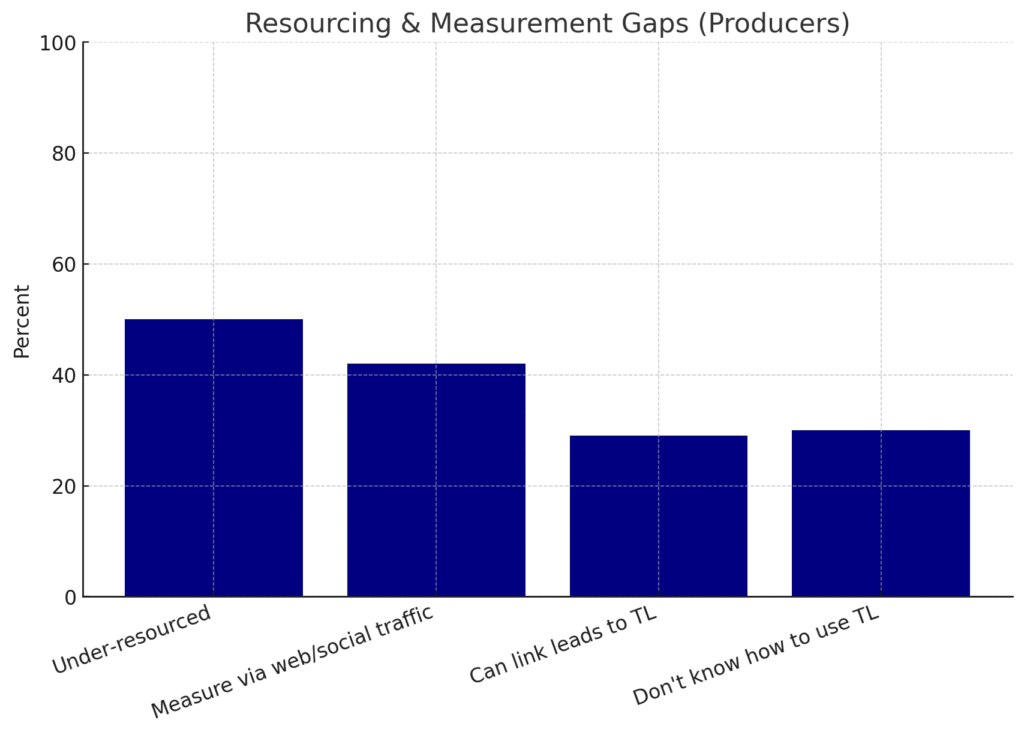
Source: Edeleman Resourcing & Measurement Gaps (Producers)
What to do:
Create an Editorial Board (CEO/GM, CFO, CTO/CIO, CMO, Head of Sales), appoint an Editor-in-Chief, and design a scalable content factory—governance, workflows, asset templates, and SLAs with Sales. Tie everything to post-meeting follow-ups and opportunity creation.
Part 4: The 2026 strategy blueprint for NZ B2B leaders
1) Set the mandate: growth and defence
Your thought leadership has two equal jobs:
-
Offence: generate senior meetings, RFP invitations, and a price premium.
-
Defence: keep accounts safe by out-teaching competitors and neutralising their narratives.
Put both into your OKRs and board updates.
2) Define a sharp editorial thesis
Write the three contrarian statements your brand will defend in 2026. Test them with customers, analysts, and your board. If your POV does not change minds, it will not change pipeline.
3) Build a three-layer content system
-
Flagship research (annual/biannual)
A defensible study with NZ and trans-Tasman relevance. Include methods, sample, and limitations. Publish an executive summary, an “if-we-were-you” memo for each vertical, and a board-ready slide deck. -
Decision tools (quarterly)
Checklists, calculators, and playbooks that move a deal forward. Think “cost of inaction” models for CFOs, architecture choices for CTOs, and “no-regret moves” for COOs. -
Signals stream (monthly/fortnightly)
Short explainers that interpret new regulations, tech shifts, and market moves. Always end with “What to do next” in three bullets.
4) Package for formats and channels that work
-
Video first for highlights and cases;
-
Case stories that show a real buyer moving from risk to result;
-
Executive forums and webinars as your core distribution spikes;
-
Email and LinkedIn to sustain attention between spikes;
-
Corporate blog to host the library and capture search demand.
5) Integrate with Sales from day one
For every flagship, ship a Sales Pack:
-
A four-slide value proof (data → implication → case → next step).
-
A short talk-track with objection handlers.
-
A one-page brief tailored to each target industry.
-
A call-to-action that creates a meeting (e.g., executive briefing, diagnosis workshop).
In your CRM, tag every asset with UTMs and enforce a simple rule: no meeting note is complete without the “content used” field.
6) Measure what matters
Replace vanity metrics with signals that match how buyers actually buy:
-
Meeting creation in target accounts
-
RFP invitations and shortlist rates
-
Opportunity velocity and influenced revenue
-
Price realisation/premium achieved
-
Renewal and expansion, tracked against executive engagement with your content
Use a Quarterly Content P&L: inputs (hours and dollars) vs outputs (meetings, RFPs, revenue, retention) for each flagship and major play.
7) Institutionalise senior authorship
Book recurring creation time for your CEO/GM and principals. Use recorded interviews to capture their POV; have editors shape the drafts. Senior by-lines are a quality signal and a growth driver.
8) AI-enabled, human-led
Deploy AI to make the factory faster, not to replace your point of view:
-
Research support, outline generation, repurposing, and SEO housekeeping
-
Style and compliance checks against your content standards
-
Watermarked drafts and human sign-off for everything public
9) Governance that builds trust
-
Editorial Board signs off research claims and red-lines.
-
Every flagship ships with a Methods box.
-
Review cadence: quarterly audits of accuracy, originality, and accessibility.
Part 5: Build a 90-day rollout plan
Days 1–30 — Decide and design
-
Finalise your thesis and three flagship hypotheses.
-
Commission research or data synthesis.
-
Stand up governance: Editorial Board, Editor-in-Chief, and workflow.
-
Define your scorecard and add the fields to CRM/marketing automation.
Days 31–60 — Produce and package
-
Field the research, draft the report, film the 6–8 minute executive video, and capture two case stories.
-
Build the Sales Pack (slides, talk-track, one-pagers).
-
Create the first two decision tools (calculator/checklist).
-
Prepare the launch forum agenda and invite list (NZ plus AU).
Days 61–90 — Launch and learn
-
Host the executive forum (Auckland + virtual) and an AU session.
-
Publish the flagship, video, and case stories.
-
Run two industry-specific webinars.
-
Report on meetings created, RFP invitations, opportunity velocity, premium evidence, and at-risk account engagement.
Part 6: Practical content plays for 2026 (you can start now)
-
“State of the Market” + Calculator
Flagship research anchored in NZ data. Include a CFO-friendly model that quantifies cost of delay. -
Executive Playbook Series
Six-page guides focused on one decision each. Add a 10-minute audio version for commuting. -
Board-Room Briefings
Quarterly sessions for client exec teams. Use fresh data, scenarios, and “no-regret moves”. -
Peer-led Case Colloquiums
Invite respected customers to co-present outcomes. Convene, don’t just broadcast. -
“What We’d Do If We Were You” Memos
Short, opinionated guidance on topical risks or regulatory changes with a call to action.
Part 7: Sales enablement—turn content into commercial outcomes
-
RFP pathing: publish technical appendices and procurement-friendly summaries.
-
Pricing power: arm sellers with data points and cases that justify premium value.
-
Prospect warm-up: lead with executive briefing invites, not generic sales emails.
-
Account defence: maintain a watchlist of competitor narratives; respond with tailored “what this means for you” memos for your top 20 accounts.
Part 8: Common pitfalls to avoid
-
No POV: information without a stance won’t move a board.
-
Measuring only clicks: track meetings, RFPs, revenue, and renewals.
-
Publishing without packaging: every flagship needs a deck, cases, tools, and a Sales Pack.
-
Under-resourcing: a part-time, under-funded programme will under-deliver.
-
Siloed execution: lock content, sales, product, and customer success into one workflow.
10 board-level actions for the year ahead
-
Adopt a dual mandate: growth and defence KPIs for thought leadership.
-
Fund one flagship in H1 2026.
-
Stand up a measurement spine that connects assets to meetings, RFPs, revenue, and retention.
-
Launch a quarterly executive forum and pair each with a webinar.
-
Codify your POV in three contrarian statements—and defend them.
-
Package Sales Packs for every flagship (slides, talk-track, one-pagers, objections).
-
Nurture the out-of-market 95% with a monthly “Signals” stream.
-
Schedule senior authorship time and record expert interviews.
-
Run an account-defence programme with tailored executive briefs.
-
Publish the how: end every asset with a checklist, a timeline, or a case.
FAQs
What is B2B thought leadership?
Public, free content that offers expertise, guidance, or a unique point of view—such as reports, videos, webinars, and case stories. It is not product copy, and it’s not gated services or paid deliverables.
Does thought leadership really drive revenue?
Yes. Consistent, high-quality programmes increase receptivity to outreach, increase RFP invitations, support premium pricing, and can trigger purchasing decisions.
Which formats are most effective in 2026?
Videos and case studies are top performers, with e-books/white papers and research reports close behind. Use short articles for rhythm and reach, and package everything for in-person events and webinars.
Which distribution channels work best?
In-person events and webinars rank highest for effectiveness, followed by email, organic social platforms, and blogs on your corporate site.
Where should we spend paid media budget?
Search (SEM/PPC) often delivers the best results for content-driven outcomes. Social ads are widely used for reach; sponsorships can be powerful for authority and community access.
How should we measure ROI?
Track executive meetings, RFP invitations, opportunity velocity, price realisation, and renewals. Do not rely on page views or social likes as your primary scorecard.
What’s the role of AI?
Use AI to reduce grunt work—research support, first-draft outlines, repurposing, optimisation checks—within clear governance. Keep the point of view, interviews, and final sign-off human.
How often should we publish?
Aim for an annual flagship, quarterly decision tools, and a monthly “Signals” stream. Pair publication with executive forums and webinars.
How do we get senior buy-in?
Create an Editorial Board, book recurring authoring time, and co-create assets with principals and product leaders.
References
-
Edelman–LinkedIn B2B Thought Leadership Impact Report, 2024.
-
Content Marketing Institute & MarketingProfs: B2B Content Marketing Benchmarks, Budgets, and Trends — Outlook for 2025.

Be First to Comment